European car maintenance: what a proper service should include
Posted: May 11, 2026

European vehicles are some of the best-engineered cars on the road. From German marques like BMW, Audi, Mercedes-Benz and Porsche to Italian names such as Alfa Romeo, Ferrari and Lamborghini, they deliver performance, comfort and driving pleasure. That engineering also means maintenance has to be done properly, with the right fluids, parts and tools.
This guide explains what a proper European car service should include, why these cars need a specialist approach, and the mistakes that cost owners the most. If you want hands-on help, see our page on European car service in Canberra.
A proper European car service should follow the manufacturer’s logbook and include oil and filters that carry the correct manufacturer approval, a full diagnostic scan of every module, brake, suspension and steering checks, fluid checks and changes when due, tyre and battery tests, and a service reset and record. It should end with a written report on anything found.
What should a proper European car service include?
A complete service goes well beyond an oil and filter change. Expect it to cover:
- Logbook servicing following the manufacturer’s schedule and specifications
- Engine oil and filter that meet the manufacturer’s oil approval for your engine
- A full electronic diagnostic scan of engine, gearbox, brake, airbag and body modules, plus software updates where needed
- Brake, suspension and steering inspections
- Fluid checks and replacements when due, including coolant, brake fluid and gearbox oil (see our guide to DSG service intervals)
- Tyre condition, pressure and alignment checks
- Battery health testing and charging system checks (many European cars need a new battery registered and coded to the car)
- Air conditioning and cabin filter checks, with a regas if cooling has dropped off
- Exhaust and emissions checks
- A service reset and record, logbook stamp or digital entry, plus an itemised invoice
Why European cars need specialist maintenance
European vehicles use sophisticated electronic control units, complex software, high-performance engines and precise components. Routines that suit a basic commuter car often fall short. Without factory-level diagnostic tools, faults in the engine management system or transmission can go undetected.
Modern European cars also rely on networks of sensors and regular software updates. A workshop that knows these systems can keep them calibrated. Ignoring them can lead to warning lights, higher fuel use or system failures that cost far more to fix later.
Key benefits of regular maintenance
- Safety and reliability: brakes, suspension, steering and stability systems are checked at every service, so problems are caught early.
- Warranty protection: under Australian Consumer Law, logbook servicing by qualified technicians using parts that meet the manufacturer’s specifications keeps your new car warranty intact, at the dealer or at an independent specialist.
- Performance and efficiency: fresh oil, clean filters and correct software keep engines responsive, gearboxes smooth and fuel use down.
- Lower running costs: fixing small issues at a scheduled service is far cheaper than an emergency repair.
- Longer vehicle life: correct parts and procedures help a European car stay reliable well past 150,000 km.
Common European car maintenance mistakes to avoid
- Using a general workshop without European-specific diagnostic tools
- Stretching or skipping scheduled services
- Using the wrong oil, or cheap parts that do not meet manufacturer tolerances
- Ignoring unusual noises or dashboard warnings
These mistakes lead to faster wear, higher repair bills and potential safety risks. If you are weighing up where to service your car, our companion article on independent vs dealer servicing explains your options.
Specialist care at Eurotech Canberra
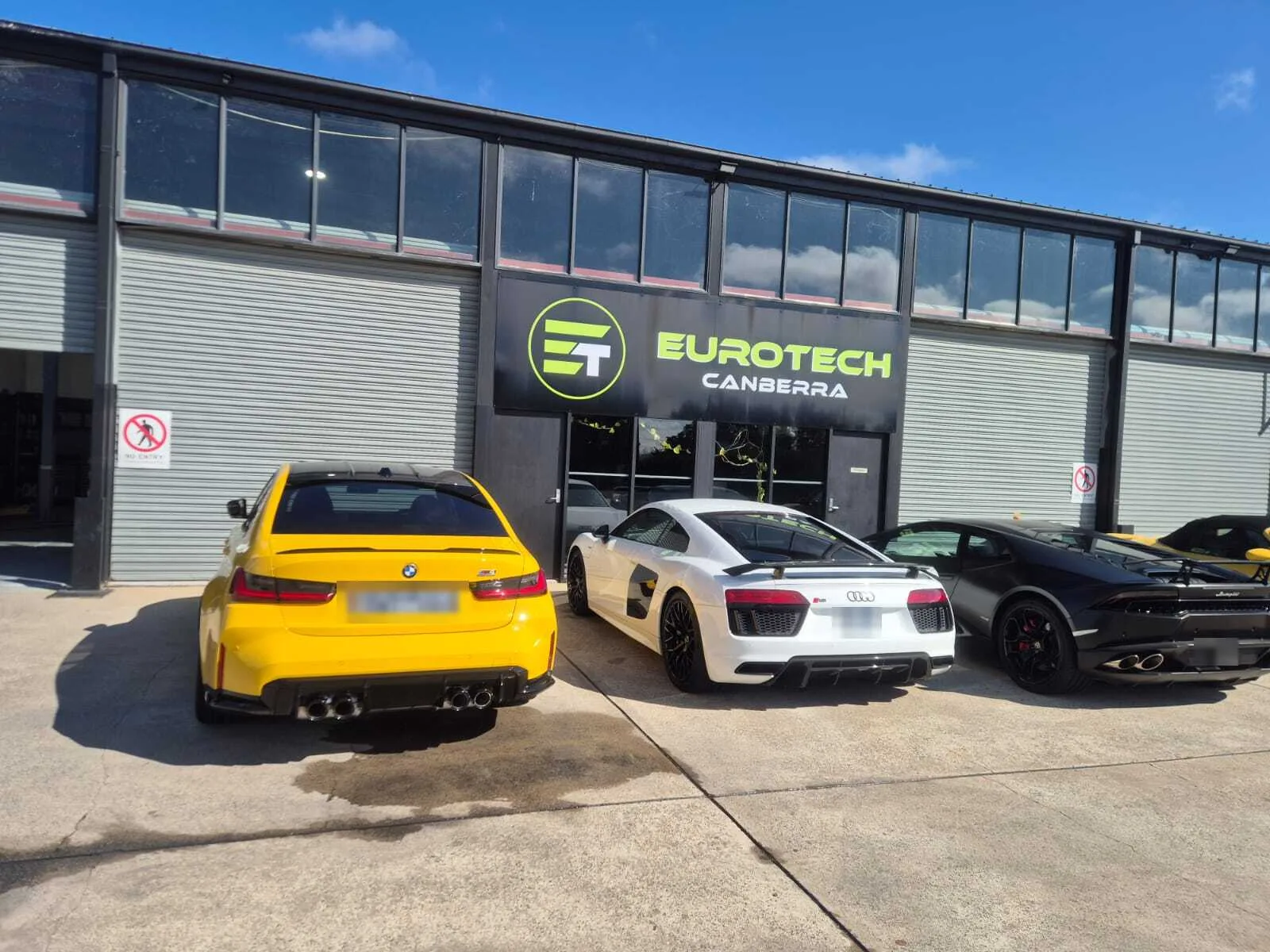
Eurotech Canberra is an independent European car specialist at 103 Newcastle St, Fyshwick, open Monday to Friday 8am to 5pm. Our master technician, Vijesh Otto, spent 12 years working on exotic cars in Bahrain and Dubai. We offer warranty-safe logbook servicing and mobile diagnostic scans in Canberra, for everything from daily-driver Audis and BMWs to high-performance Porsches and supercars.
Frequently asked questions
How often should a European car be serviced?
Most current European cars sold in Australia are serviced every 12 months or 15,000 km, whichever comes first, but schedules vary. BMW uses Condition Based Servicing, where the car tells you what is due, and Mercedes-Benz alternates Service A and Service B. Check your logbook or the service reminder, and service sooner if you mostly do short trips.
What is the difference between a minor and a major service?
A minor service usually covers oil and filter, a diagnostic scan, safety checks and fluid top-ups. A major service adds items due at set milestones, such as spark plugs, air and cabin filters, brake fluid, coolant, gearbox oil or a timing belt. Your logbook lists exactly what each service at each interval should include.
Why does European car maintenance cost more?
European cars often need oils with specific manufacturer approvals, brand-specific parts and diagnostic software that costs workshops more to run. Some jobs, such as battery coding or gearbox services, also take extra steps. Regular maintenance usually saves money overall, because small faults found early are much cheaper to fix than major failures later.
What happens if I skip a service?
Skipping a service lets oil break down, filters clog and small faults go unnoticed, which speeds up wear on the engine, turbo and gearbox. A gap in the service history can also complicate a warranty claim and lower the car’s resale value. If you have missed a service, book one soon and keep the invoice.
What oil does a European car need?
It needs an oil that carries the manufacturer’s approval for your engine, not just the right viscosity. Examples include VW 504 00 or 507 00, BMW Longlife-01 or Longlife-04, and Mercedes-Benz 229.5 or 229.51. The approval code is in your owner’s manual. Using the wrong oil can harm the engine and the diesel particulate filter.
Ready to schedule your next service?
Book a service online or contact us directly:
- Phone: 02 5154 7000
- Mobile: 0431 614 455
- Email: service@eurotechcanberra.au
- Address: 103 Newcastle Street, Fyshwick ACT 2609